
Before You Buy, Sell, Or Cancel Your Caribbean Timeshare, Understand What You Own.
Understand your ownership rights, avoid costly mistakes, and discover your options for protecting your investment or exiting your Caribbean timeshare—with guidance from an experienced timeshare industry insider.

“If you signed a timeshare or vacation-club contract on a Caribbean island, do not assume you are trapped. Depending on the company, jurisdiction, disclosures, and sales practices, the agreement may be challengeable or unenforceable—but following the right cancellation process matters.”
–Wayne C. Robinson
25-Year Timeshare Industry Insider


Start With The Right Questions
What Did You Purchase?
A deeded timeshare, vacation-club membership, points program, or right-to-use agreement?
Most companies that sell vacation club memberships throughout the Caribbean don’t own a single room at the resorts where they sell. They simply arrange access to rooms owned by someone else. That’s a big difference from a timeshare.
A deeded timeshare is real property. You own a piece of the resort, and your name is on the deed. A vacation club is just a membership. Think of it like Costco, but for supposedly discounted hotel stays. You’re paying for access, not ownership.
The “discount” is often the biggest letdown. I’ve heard from many members who checked prices online after they bought. They found the general public could book the same rooms for less than members paid. They were furious, and who could blame them? They paid thousands of dollars for “savings” that didn’t exist.
So before you sign, ask one simple question: “Does this company actually own these rooms?” Then compare the member price with what anyone can book online. The answer may save you a fortune.
I wrote “deeded timeshare” on purpose. Most timeshares in Mexico and Caribbean are right-to-use contracts rather than real property. Most now feature mandatory all-inclusive memberships.

Who Is the Contracting Company?
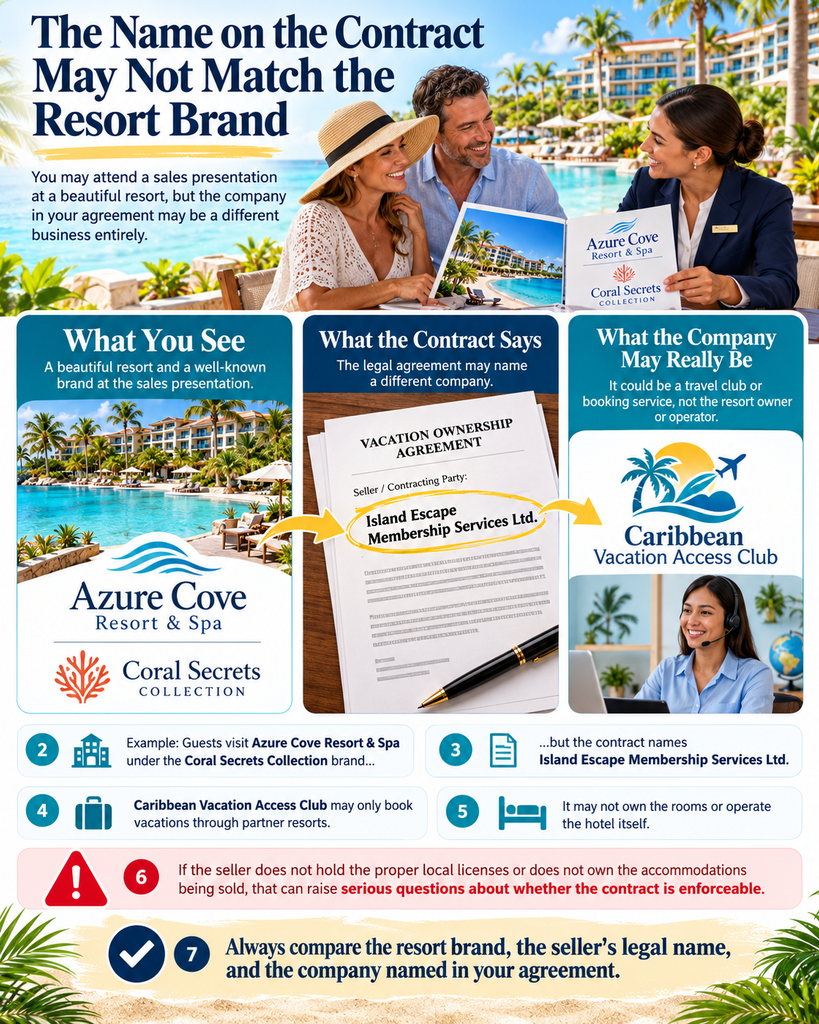
The company named in your agreement may be different from the resort or hotel brand.
For example, many members attended a sales presentation at one of several resorts under AMResorts, i.e., Secrets. However, the contract has nothing to do with Secrets or any of AMResorts except they are able to book vacations through Unlimited Vacation Club (UVC). However, UVC does not own any of the rooms at any of their resorts, and therefore, are simply nothing more than a travel agency. Moreover, they do not have business licenses to sell vacation club memberships in the places where they sell. This makes the contracts unenforceable.
Which Law Governs the Agreement?
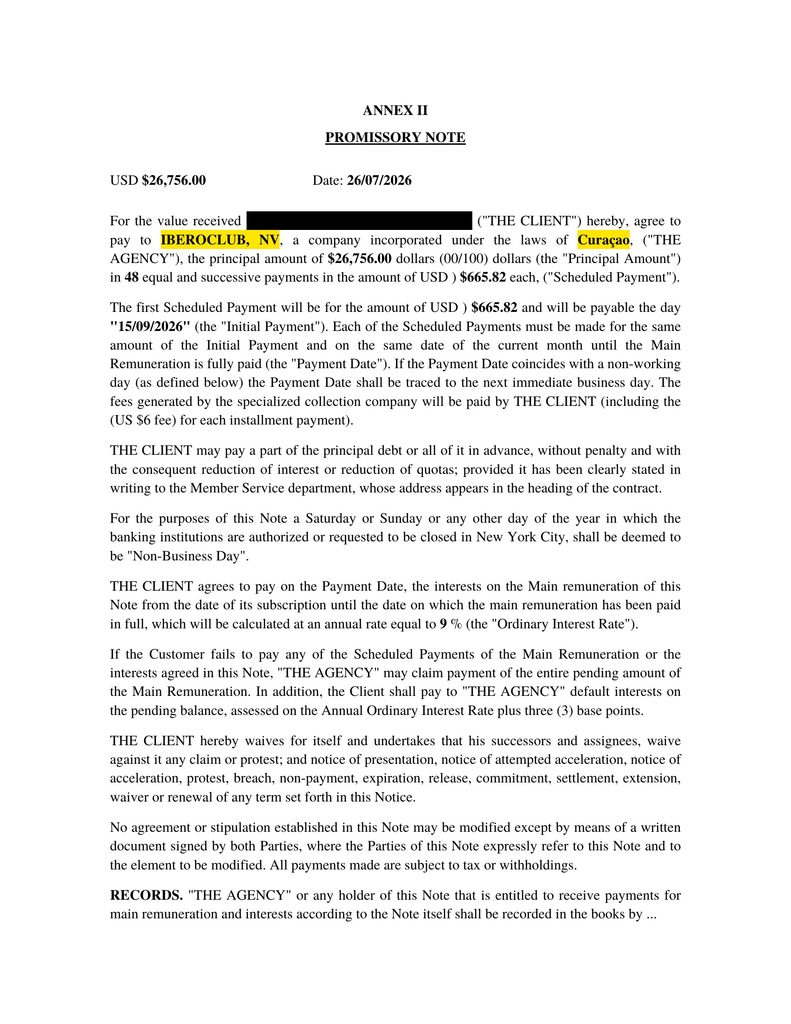
This client signed his contract while on vacation in Jamaica. He had no idea the agreement was not governed by Jamaican law. Look closely, and you’ll see the company is IBEROCLUB, NV, incorporated in Curaçao. That’s a Dutch Caribbean island more than 600 miles away.
Why would a vacation club in Jamaica set things up this way? Many of these clubs don’t hold a Jamaican business license to sell anything there. Instead, they place the contract under a foreign jurisdiction like Curaçao.
That matters for you as an owner. A company selling without a proper local license may have a contract that’s hard to enforce, or even unenforceable. Most buyers never notice this detail because it’s buried in the fine print.
The lesson is simple. Before you sign, check who you’re really doing business with, and where.